Throat Gonorrhea and Chlamydia Testing: Why a Swab Matters in Salt Lake City
This page is general health information, not medical advice. It cannot tell you whether you have an infection. A clinician can, and the testing options on this site are a good place to start.
Gonorrhea and chlamydia can live in the throat. Many people who have them there notice nothing at all. A urine test only checks the urinary tract, so it cannot look at the throat.
That is why throat std testing salt lake city clinics offer is a separate step. This guide walks you through how to ask for a throat swab, what to bring, what happens, and what the results can and cannot tell you.
Why a throat swab matters
The CDC explains that gonorrhea and chlamydia can infect the throat, the genitals and the rectum. Which sites are infected depends on the kind of sex a person has had. A test only finds infection at the place it samples.
The CDC's STI Treatment Guidelines (2021) note that infections in the throat often cause no symptoms. A person can have one and not know it. The CDC also says that testing the genitals alone can miss infection at other sites.
The guidelines recommend testing at each site of exposure for some groups, including men who have sex with men. For other people, the CDC says the evidence is more limited, so the choice depends on your history. A clinician can help you decide. This applies to people of every gender and orientation.
Testing is not about blame. It is about checking the right place so that, if treatment is needed, a clinician can prescribe it.
Who might want to ask about a throat swab
You might raise it with a clinician if any of these fit:
- You have had oral sex with a new partner or with more than one partner.
- A partner told you they tested positive for gonorrhea or chlamydia.
- You have a sore throat that does not have an obvious cause.
- You had a urine test before and wonder whether it covered everything.
You do not need to explain or justify your history. Clinicians ask these questions so they can choose the right tests.
Materials you need
You do not need to prepare much. Gather these:
- A photo ID, if the clinic asks for one.
- Your insurance card, if you have one. Some clinics accept insurance and some do not.
- A short list of the kinds of sex you have had and when, so you can answer questions accurately.
- A list of any medicines you take, and any allergies.
- A way to pay a visit fee or lab fee, if the clinic charges one.
Step-by-step: getting a throat swab in Salt Lake City
Step 1: Decide which sites to ask about
Think about where you have had sexual contact. For oral sex, the throat is one site. Other sites may need testing too. You do not have to settle this alone. Telling the clinician your history lets them recommend the right swabs.
Step 2: Choose a clinic and call ahead
Several Salt Lake City clinics offer STI testing. You can compare them on our local testing list. The CDC's GetTested directory at gettested.cdc.gov is another place to look.
Not every page says whether throat swabs are offered. So when you call, ask directly: "Do you do throat swabs for gonorrhea and chlamydia?" This one question can save you a trip.
Some places you could ask:
- Salt Lake County Health Department STD Clinic, 610 South 200 East (enter from 200 East). The phone is 385-468-4242. The county's testing page says the clinic is open Monday to Friday, 8:00 AM to 5:00 PM, and opens at 1:00 PM on the 1st and 3rd Wednesday of each month. It says walk-ins are accepted when possible and that appointments shorten the wait.
- Planned Parenthood Association of Utah, Salt Lake Health Center, 654 S 900 E, (801) 322-5571. The CDC GetTested listing says an appointment is required, insurance and Medicaid are accepted, and fees are on a sliding scale.
- Community Health Centers Inc., including Oquirrh View at (801) 964-6214 and Ellis R. Shipp Clinic at (801) 676-4405. The CDC GetTested listings say they use a sliding scale and ask you to contact them about eligibility.
- University of Utah Health, Redwood Health Center, (801) 213-9900, which lists insurance and PrEP assistance on its CDC GetTested page.
For hours at the clinics that do not publish them, check with the clinic before you go.
Step 3: Ask about cost before you book
The Salt Lake County Health Department publishes its fees. Its testing page lists an office visit of $60 for county residents and $80 for people outside the county. It lists chlamydia and gonorrhea testing at $40 per site. The page also says the clinic cannot bill health insurance.
"Per site" matters for you. A throat swab is its own site, so ask how many sites your visit would cover and what the total would be. The page does not say which sites are swabbed, so confirm this by phone: 385-468-4242. For other clinics, ask what the visit and lab charges are, since not all of them publish prices.
Step 4: Tell the clinician about your sexual contact
At the visit, you will be asked about your partners and the kind of sex you have had. Be as specific as you can. Say "oral sex" if that applies. The answer decides which swabs are collected.
Step 5: Have the swab collected
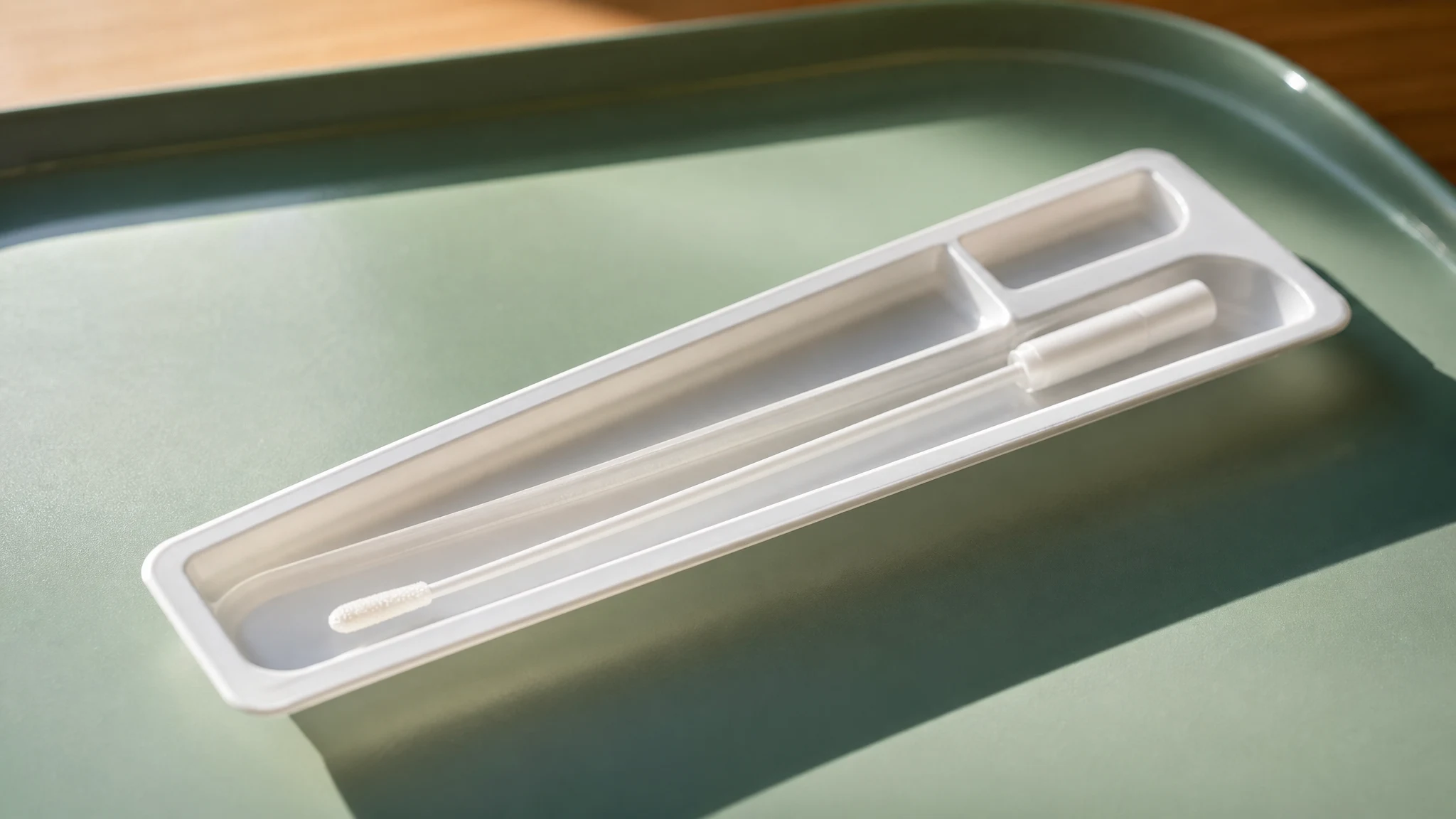
A clinician, or sometimes you, rubs a soft swab over the back of the throat and the tonsil area. It takes a few seconds. You may gag a little or feel a scratchy tickle. It should not be painful.
The CDC recommends a type of lab test called a nucleic acid amplification test (NAAT) for gonorrhea and chlamydia. It looks for the genetic material of the bacteria. The clinic or lab will tell you which test it uses.
Step 6: Ask how and when you will get results
Before you leave, ask how the clinic shares results, how long it usually takes, and what number to call. Write the answer down. Ask what happens if the result is positive.
Step 7: Plan for follow-up
If a clinician prescribes treatment, take it exactly as they direct. The CDC notes that people treated for throat gonorrhea should have follow-up testing, and a clinician will say when. Ask about partners too. Utah DHHS says expedited partner therapy in Utah covers chlamydia and gonorrhea, so ask whether it applies to you.
Tips for a smoother visit
- Ask the clinic whether to avoid eating, drinking, gargling or using mouthwash before the swab. Some clinics give instructions, and others do not. It is better to ask than to guess.
- Bring up the throat even if you have no symptoms. Throat infections often have none, according to the CDC.
- If you are 14 or older, Utah DHHS says you can get STI care without a parent's consent. The county clinic says it tests anyone 14 or older.
- Ask about other tests that fit your history, such as HIV and syphilis. The county clinic lists HIV testing and syphilis testing among its services.
Common mistakes to avoid
- Assuming a urine test covered the throat. It did not sample it. Ask which sites were tested.
- Skipping the question because it feels awkward. Clinicians hear it every day. A plain question gets a plain answer.
- Not confirming the clinic does throat swabs. Publicly listed services do not always spell this out.
- Stopping after treatment. Follow-up and partner care are part of getting it right.
- Assuming one negative result lasts forever. A result reflects the day it was collected. New exposures need new testing.
What to expect from the results
A test result can show whether the lab found genetic material from gonorrhea or chlamydia in the sample from that site. A negative result suggests that none was found in that sample. No test is perfect. Results can be wrong in either direction, and a recent exposure may not show up yet.
Ask the clinician how recent exposures affect your results. Do not rely on a number you read elsewhere.
If a result is positive, both infections are curable. The CDC says they are treated with antibiotics that a clinician prescribes. You and your recent partners should be treated, and a clinician can explain which partners should be told and how.
Only a clinician can interpret your results in light of your symptoms and history.
Why this matters in Salt Lake County
Utah IBIS-PH, the state health department's data portal, reports that in 2022 Salt Lake County had 479.7 chlamydia cases per 100,000 people. The statewide rate was 328.7. For gonorrhea, the county rate was 166.4, compared with 91.2 statewide.
These are reported cases. Because many throat infections cause no symptoms and go untested, the true numbers may be higher. Still, the takeaway is simple. Testing the right site is a routine, practical part of care here.
Next steps
Pick a clinic, call, and ask three things: do you do throat swabs, what will it cost, and how will I get my results. You can also browse gettested.cdc.gov for more Salt Lake City options.
Free and low-cost testing is available locally. Using it is a sign you are looking after your health.
Sources
- CDC, Sexually Transmitted Infections Treatment Guidelines, 2021
- CDC, Gonorrhea fact sheet
- CDC, Chlamydia fact sheet
- CDC GetTested, STD and HIV testing locator
- Salt Lake County Health Department, Infectious Disease Clinic testing and fees
- Salt Lake County Health Department, Infectious Disease Clinic contact and hours
- CDC GetTested, Planned Parenthood Association of Utah listing
- CDC GetTested, Community Health Centers Inc., Oquirrh View listing
- CDC GetTested, University of Utah Health, Redwood Health Center listing
- Utah IBIS-PH, Chlamydia Cases
- Utah IBIS-PH, Gonorrhea Cases
- Utah DHHS IBIS, available services and minor consent (Utah Code 26B-7-214)
- Utah DHHS, Expedited partner therapy