Which STDs Are Tested With a Blood Draw in Salt Lake City
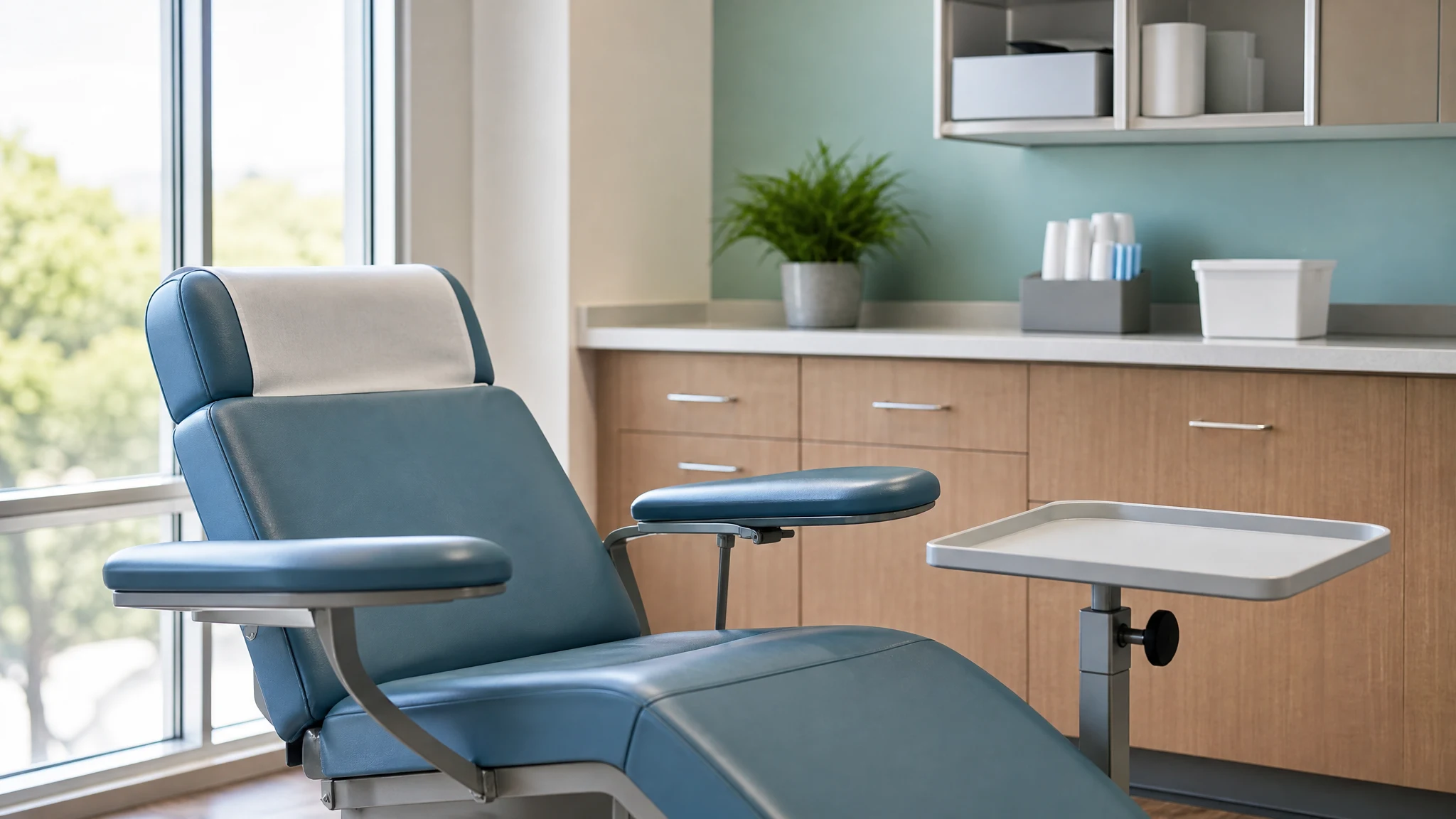
This page is general health information, not medical advice. It cannot tell you whether you have an infection. A clinician can, and the testing options on this site are a good place to start.
Not every STD test uses a blood sample. Some use urine, a swab, or a sample from a sore. Blood tests cover a specific set of infections. Knowing which ones helps you ask for the right tests and avoid a second visit.
This guide walks you through blood STD testing in Salt Lake City, step by step. It covers what a blood draw can look for, what to bring, what to ask, and what the results may mean.
Which infections a blood draw can check
A clinician may use blood to test for these infections:
- HIV. The CDC recommends that everyone ages 13 to 64 get tested for HIV at least once, and more often if there are ongoing reasons to test. HIV is treatable, and people on treatment can live long, healthy lives.
- Syphilis. Syphilis is checked with a blood test. It is curable with treatment from a clinician. The USPSTF recommends screening for people at increased risk and for all pregnant people.
- Hepatitis B and hepatitis C. These are viral infections of the liver. The CDC recommends screening adults at least once. Hepatitis C is curable with treatment from a clinician. Hepatitis B is manageable with care.
- Herpes (HSV). A type-specific blood test exists. The CDC STI Treatment Guidelines (2021) do not recommend routine herpes blood screening for people without symptoms. A clinician can talk through whether it fits your situation. Herpes is not curable, but it is manageable.
Chlamydia, gonorrhea and trichomoniasis are usually tested with urine or a swab, not blood. Human papillomavirus (HPV) is not tested with blood either. If you want a full picture, ask for a panel that combines blood and non-blood tests.
What you need before you go
- A list of the tests you want to ask about, based on the section above.
- The approximate dates of any recent exposure. Timing affects which test makes sense.
- Your insurance card, if you have one. Some clinics bill insurance and some do not.
- A photo ID. Ask the clinic what else it needs.
- A way to pay, if the clinic charges fees.
- A list of any medicines you take, including PrEP or doxy-PEP, so the clinician has the full picture.
Step-by-step: getting a blood STD test in Salt Lake City
Step 1. Decide which blood tests to ask about
Start with the list above. HIV and syphilis are the two blood tests most clinics offer. Hepatitis B, hepatitis C and herpes blood tests vary by site. You do not have to decide alone. A clinician can recommend tests based on your history.
Step 2. Think about timing
Every infection has a window period. This is the time between an exposure and when a test can reliably detect the infection. The CDC gives these ranges for HIV:
- A nucleic acid test (NAT) on a blood draw can usually detect HIV 10 to 33 days after exposure.
- An antigen/antibody test on a lab blood draw can usually detect it 18 to 45 days after exposure.
- Antibody tests can take longer, generally 23 to 90 days.
For syphilis, hepatitis and herpes, ask the clinician how recent exposures affect your results. If you tested soon after an exposure, a clinician may suggest testing again later.
Step 3. Pick a place that offers the blood tests you want
Services differ from site to site. Here is what the published listings say.
- Salt Lake County Health Department STD Clinic / Infectious Disease Clinic, 610 South 200 East (enter from 200 East). Its testing page lists an HIV blood test and a syphilis test. Phone 385-468-4242. Hours are Monday to Friday, 8:00 AM to 5:00 PM, and the clinic opens at 1:00 PM on the 1st and 3rd Wednesday of each month. Walk-ins are accepted when possible, and appointments shorten the wait. Testing is available for anyone 14 or older.
- Planned Parenthood Association of Utah, Salt Lake Health Center, 654 S 900 E, (801) 322-5571. The CDC GetTested directory lists HIV (rapid and blood draw), hepatitis B and C, herpes and syphilis testing. Appointments are required. It lists a sliding scale and accepts insurance and Medicaid.
- Community Health Centers Inc., Oquirrh View Community Health Center, 4745 S 3200 W, (801) 964-6214. The directory lists HIV (blood draw), herpes and syphilis testing, with a sliding scale. Appointments are required.
- Community Health Centers Inc., Ellis R. Shipp Clinic, 4535 S 5600 W, (801) 676-4405. Similar blood tests are listed, with a sliding scale.
- University of Utah Health, Redwood Health Center, 1525 W 2100 S, (801) 213-9900. The directory lists HIV and syphilis blood tests, plus PrEP navigation. Insurance is accepted, and PrEP help is listed for people without insurance.
- Utah Naloxone (Andy's Wellness Center), 525 East 100 South, Suite 4400, (385) 495-9050. A directory listing shows HIV and hepatitis C testing. The listing does not state costs or walk-in rules, so call first. It lists hours as Monday, Thursday and Friday, 10:30 AM to 4:30 PM.
For more on each option, see our guide to where to get tested for STDs in Salt Lake City. You can also browse the local testing list. The CDC's GetTested directory lets you look up more sites by ZIP code.
Step 4. Call ahead and ask about cost
Prices vary widely. The Salt Lake County Health Department publishes these fees on its testing page:
- Office visit: $60 for Salt Lake County residents, $80 for people outside the county.
- No office visit fee if you are testing only for HIV.
- HIV blood test: $50.
- Syphilis test: $40.
- Chlamydia or gonorrhea test: $40 per site.
The health department also says rapid HIV testing is free to high-risk individuals while grant funds last. It also says the clinic cannot bill health insurance. Fees may change, so confirm when you call.
For the University of Utah Health and Utah Naloxone sites, the listings do not publish prices. Ask when you call.
The University of Utah Student Health Center offers HIV and STI testing by appointment, with a visit fee and lab charges. Its page does not say whether non-students can use it, so check with them first. Its Campus Wellness mobile clinics offer free HIV, gonorrhea and chlamydia testing for people without symptoms.
Step 5. Get the draw
A blood draw usually takes a few minutes. A clinician or technician cleans your arm, inserts a small needle into a vein, fills one or more tubes, and places a bandage. Some HIV tests use a finger stick instead. Tell the person drawing your blood if you feel faint around needles. Many people find it easier to sit or lie down.
Step 6. Ask how and when you will get results
Before you leave, ask:
- How will the clinic share results (phone, portal, or in person)?
- How long do results usually take?
- Which tests, if any, should be repeated later because of timing?
Step 7. Follow up
If a result is positive, a clinician explains the next steps. Bacterial infections like syphilis are curable with treatment a clinician prescribes. HIV and herpes are not curable, but both are treatable and manageable. If a result is negative but your exposure was recent, ask whether a repeat test makes sense.
Tips for a smoother visit
- Ask for specific tests by name. A general request for an STD check may not include hepatitis or herpes blood work.
- Combine blood and non-blood tests. A blood draw alone does not cover chlamydia, gonorrhea or trichomoniasis.
- Bring up PrEP and doxy-PEP. The CDC issued doxy-PEP guidance in 2024. A clinician can say whether it applies to you, and what monitoring goes with it.
- If you are pregnant, say so. Utah DHHS cites Utah Code 26B-7-216, which calls for syphilis screening for all pregnant patients within 10 days of their first exam.
- If you are 14 to 17, the Utah DHHS IBIS site cites Utah Code 26B-7-214 as allowing STI care without parental consent starting at age 14.
Common mistakes to avoid
- Testing once and assuming it covers everything. A single test reflects the window period for that infection.
- Skipping the question about what is included. Ask which infections your panel covers.
- Not calling ahead. Several sites require appointments, and hours may change.
- Assuming insurance works everywhere. The county clinic says it cannot bill insurance. Other sites accept it.
- Waiting out of worry about judgment. Clinicians see these questions every day. Testing is routine health care.
Why this matters in Salt Lake County
Utah IBIS-PH reported a 2022 primary and secondary syphilis rate of 13.7 per 100,000 people in Salt Lake County. The statewide rate was 7.0 per 100,000. Syphilis is found with a blood test, which is one reason blood STD testing in Salt Lake City is worth knowing about. Utah IBIS-PH also lists 1,887 people living with HIV in Salt Lake County in 2020, a rate of 158.8 per 100,000. This is prevalence, not new diagnoses. Newer county-level figures were not available to us, so check the health department for current numbers.
What to expect from your results
Results are usually reported as negative, positive, or sometimes inconclusive. A negative result may mean no infection was detected at that time. It may not be the final answer if you tested early in the window period. A positive result often needs a confirmatory test. A clinician can explain what your specific results mean and what comes next.
Many clinics give results within days, though some tests take longer. Rapid HIV tests may return results during the visit. Ask the clinic for its timeline.
Next step
Pick a site from the list above, call to confirm the tests, cost and hours, and book a time. If you are unsure where to start, the Salt Lake City Public Health Center clinic line is 385-468-4225, and walk-ins are permitted, though calling ahead for an appointment is preferred. You can also look up more sites at gettested.cdc.gov.
Sources
- CDC STI Treatment Guidelines (2021) and updates
- CDC HIV testing information
- CDC GetTested directory
- Salt Lake County Health Department, STD and Infectious Disease Clinic testing page
- Salt Lake County Health Department, clinic contact page
- Utah IBIS-PH, Syphilis Cases (2022)
- Utah IBIS-PH, HIV Infections
- Utah DHHS, Congenital Syphilis (Utah Code 26B-7-216)
- Utah DHHS IBIS, available services (Utah Code 26B-7-214)